
推荐阅读


最新留言
文章评论区即将上线,敬请期待 💬
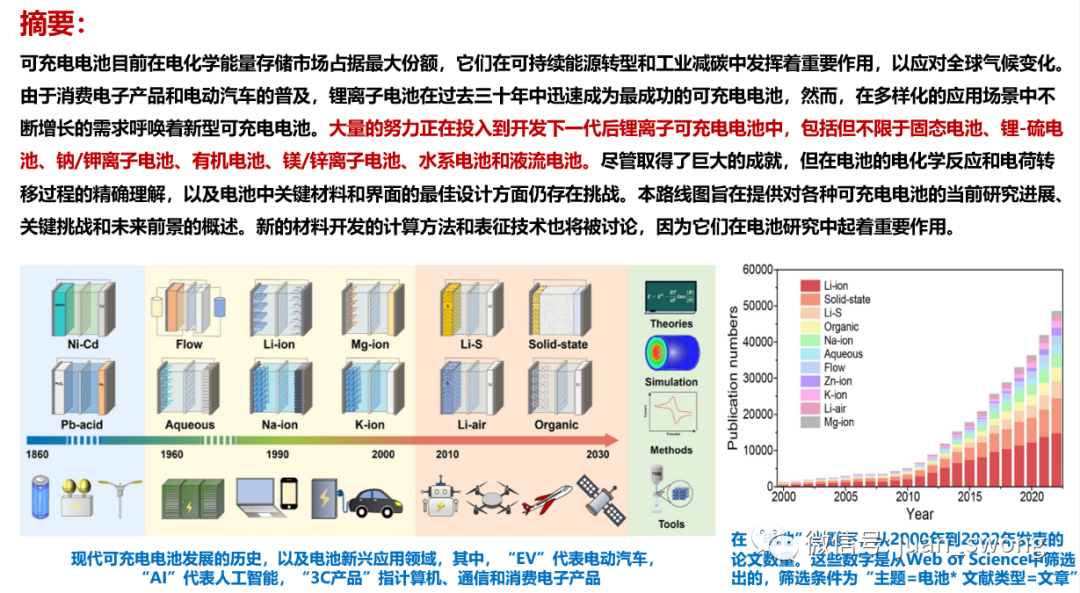
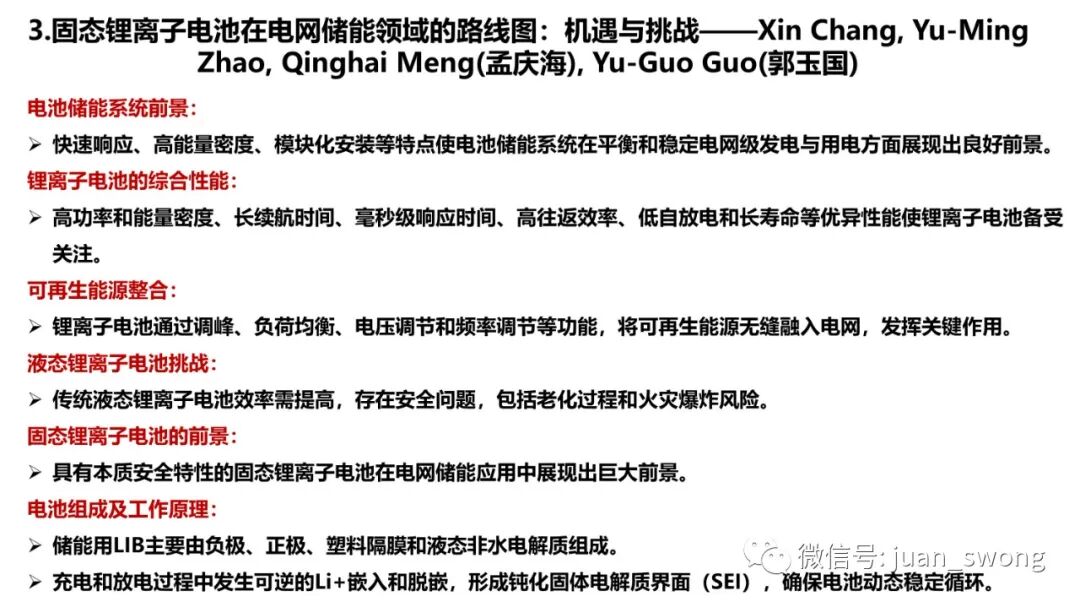
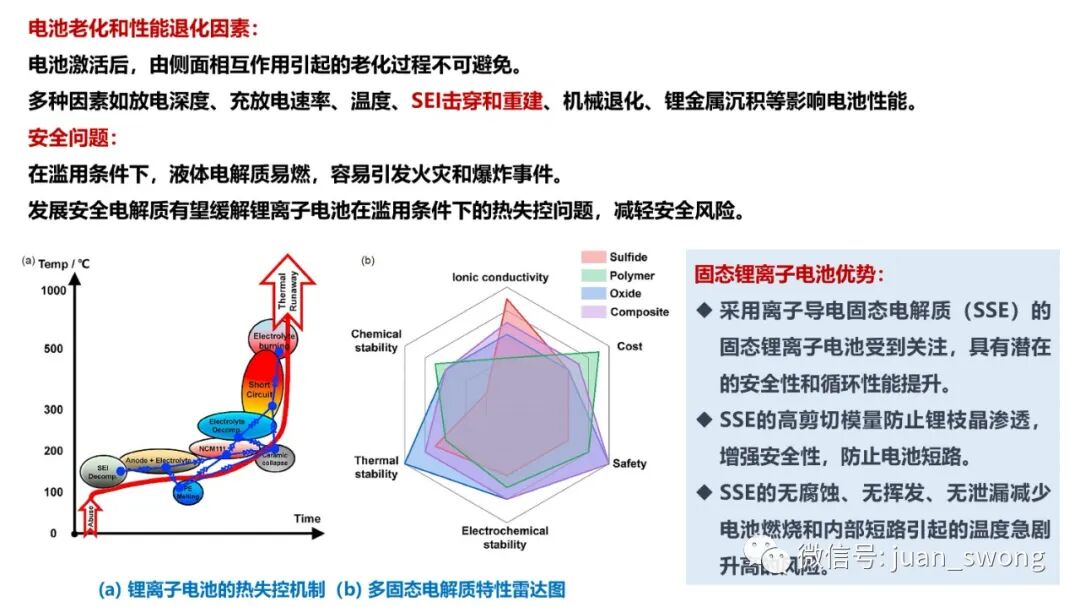

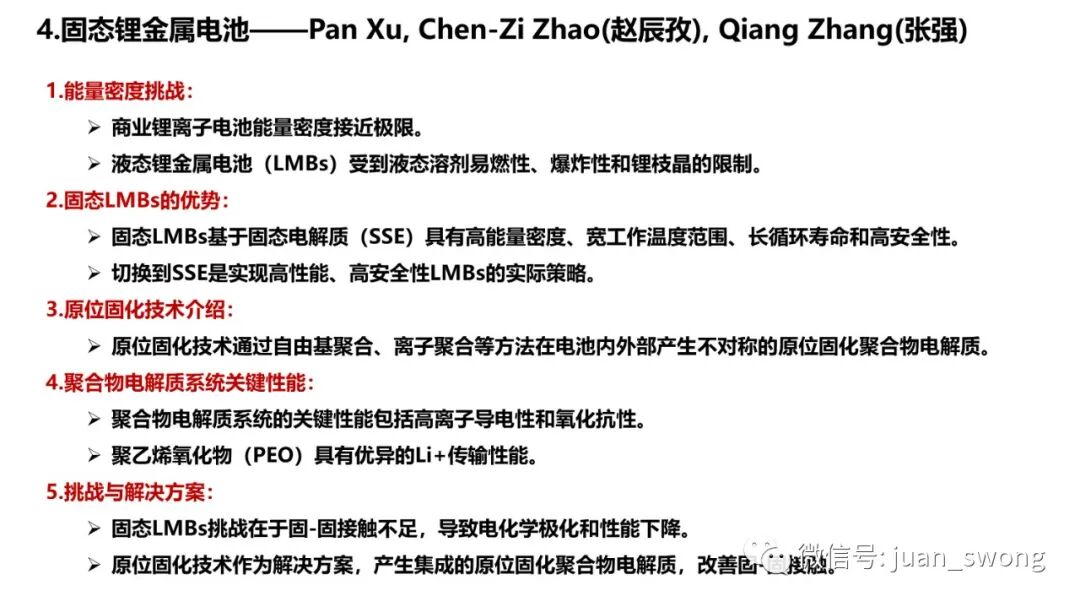
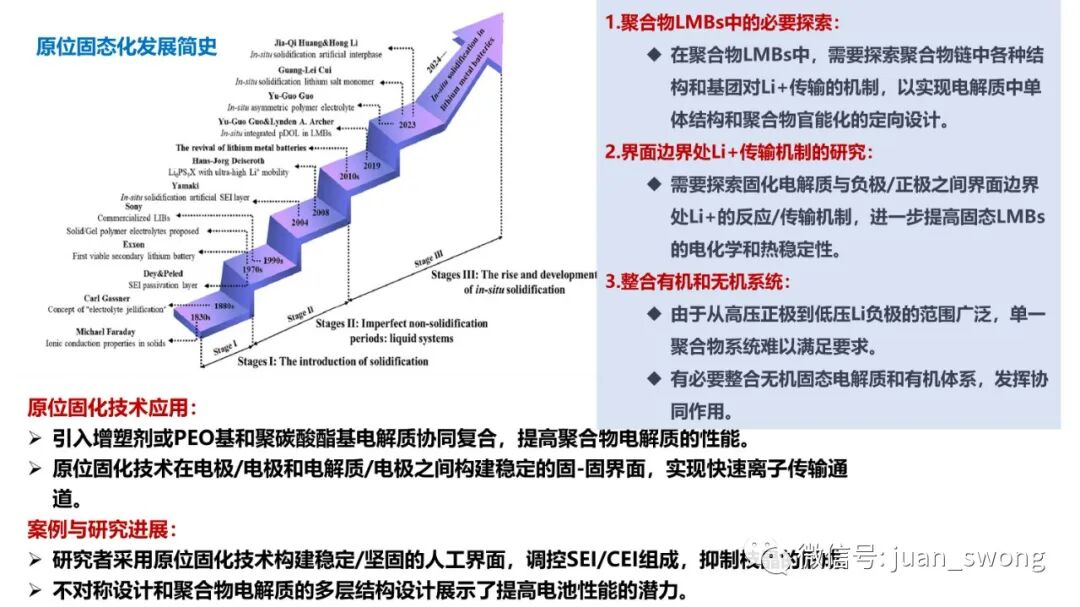 In the current landscape of rechargeable batteries, lithium-ion technology dominates the market. The roadmap focuses on optimizing and enhancing lithium-ion batteries, aiming to improve energy density, extend cycle life, and enhance safety features. Additionally, there’s a strategic emphasis on integrating rechargeable batteries into Energy Storage Systems (ESS) for grid applications. This involves enhancing the capabilities of batteries for stationary storage, particularly to support renewable energy sources. The roadmap also addresses the electric vehicle (EV) sector, pushing for advancements in energy density and charging infrastructure, along with the development of cost-effective and sustainable materials for EV batteries. Furthermore, substantial investment is directed towards the research and development of solid-state batteries, with a focus on improving safety and energy density while addressing challenges related to manufacturing, cost, and scalability.
The roadmap envisions a transition beyond lithium-ion technology. This involves exploring alternative materials and chemistries, such as lithium-sulfur, lithium-air, and metal-air batteries. Post-lithium technologies are investigated to achieve increased energy density and reduce reliance on scarce resources. The next-generation of anode and cathode materials is a crucial aspect, aiming to develop advanced materials like silicon and lithium-metal for higher energy density. Fast-charging technologies become a priority, with a focus on significantly reducing charging times and the necessary infrastructure for ultra-fast charging in electric vehicles. Advanced manufacturing techniques, including 3D printing, are implemented to enhance scalability and cost-effectiveness. The roadmap emphasizes the establishment of a circular economy for batteries, including robust recycling and reuse programs to efficiently manage battery materials. Integration of artificial intelligence (AI) and the Internet of Things (IoT) technologies is explored, aiming to develop smart batteries capable of optimizing performance and efficient energy management. Research into biodegradable and sustainable materials for battery components is actively pursued, promoting environmentally friendly alternatives. Quantum battery research is a frontier, exploring potential breakthroughs in energy storage through quantum materials and phenomena. Lastly, there’s a dedicated effort to develop batteries suitable for space and aviation applications, addressing challenges related to weight, safety, and reliability in these demanding environments.
This comprehensive roadmap envisions a continual evolution of rechargeable batteries, encompassing improvements in existing technologies and the exploration of entirely new paradigms in energy storage.参考文献:
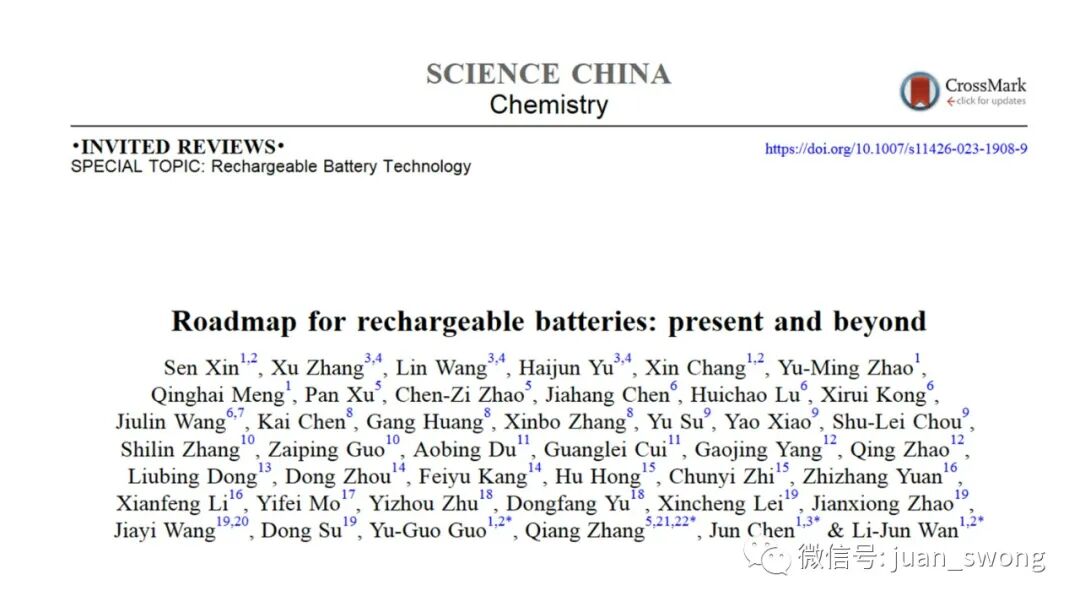
Xin S, Zhang X, Wang L, et al. Roadmap for rechargeable batteries: present and beyond[J]. Science China Chemistry, 2023: 1-30.
链接: